Showing posts with label Human Rights. Show all posts

Saturday, 7 June 2014

Beautiful Clothes, Ugly Reality: Cambodian Garment Workers Turned Models to Fight for Rights

Garment factory workers model clothes for the 'Beautiful Clothes, Ugly Reality' fashion show in Phnom Penh.
Photo courtesy of Nicolas Axelrod/Roum
Two weeks ago, the Workers Information Centre (WIC), an organization striving to improve working conditions for women garment workers, held a fashion show in Phnom Penh, Cambodia. However, the women donning these clothes were not your usual 6 foot-tall, waif-like models. Rather, the fashion show engaged the very same people who toiled under deplorable conditions and paltry wages to model the clothes they make for well-known, global brands to spotlight the social injustice facing them.

The aptly themed 'Beautiful Clothes, Ugly Reality' fashion show serves as a platform to highlight the huge income disparities between garment workers and apparel brand owners as well as to advocate for a living wage and better working conditions for these workers. Garment workers in Cambodia not only face poor working conditions and low pay but also live in fear due to violent government clampdowns that have killed five garment workersRuom Collective, a Cambodian-based social journalism platform, provides an excellent coverage of the fashion show including the issues facing these garment workers.


The Workers Information Centre is a partner organisation of the International Women's Development Agency (IWDA), a Melbourne-based NGO that I support. Above is a video made by IWDA to educate consumers on the unfair and often exploitative treatments of Cambodian garment workers, of which 90 percent comprises of women. It serves to highlight the good work carried out by WIC to empower women garment workers in Cambodia by helping them fight for a fairer wage and working conditions.

According to reports carried by just-style and Shanghai Daily, global brands including H&M, GAP and the Inditex Group (Mango, Zara etc.) have indicated that they support higher minimum wages for Cambodian garment workers. As consumers with voting rights i.e. purchasing power, let's hold these highly-profitable labels accountable for the promises they have made.

Wednesday, 14 May 2014

Fair Trade People: The Fashion Context

A Wall Street Journal Ad by Zady, an ethical online retailer
Last Saturday was like any other weekend for shopping obsessed Singapore. But in other parts of the world, various activities were organised to celebrate World Fair Trade Day, an annual event initiated by the World Fair Trade Organization. Closer to home, a competition was held at Mitra Bali Fair Trade to promote fair trade and better working environment.

This year's theme was 'Fair Trade People' and aimed to celebrate everyone involved in the social movement. So I thought it would be good to take this opportunity to delve deeper as to why I support fair trade and ethical fashion. 


I lived in Australia for close to a decade, initially to study and eventually to work before returning to Singapore at the end of 2010. The Singapore I left and the Singapore I came back to were world's apart. The scenery had changed dramatically, what with Marina Bay Sands and the Downtown Core permanently altering the skyline of the CBD area. 


Orchard Road, Singapore's shopping mecca, had also undergone a drastic transformation with new malls such as ION Orchard and Somerset 313 dotting the swanky, tree-lined streets and older malls, evidently threatened by the new entrants have undergone major facelifts to lure in well-heeled customers.   


Now, what has this got to do with fair trade you say? Along with the dazzling array of designer brands, many fast-fashion retailers including H&M, Forever 21 & Cotton On have also set up shop in Orchard Road. Working in Orchard Road, I often observe white-collar workers leaving the office midday for lunch and returning back with a shopping bag or two. Mindless consumption, that's what it has become. Because the apparels are so affordable these days that shopping is no longer consigned to a weekend workout but rather a lunch pit-stop. I myself, have been guilty on several occasions though luckily not frequent enough to be consumed by it.  


Coming back to fair trade,I used to buy fair trade products for the feel good vibe; knowing that somewhere, someone in the third world is benefiting from my tokenistic purchase. But as I sought to educate myself further on this issue, I was not only saddened by the exploitation within the retail industry but more horrified by the fact that we as consumers are perpetuating the socio-economic divide and environmental degradation solely through our consumption habits and lifestyles. 


You know how most of us complain about how the rich gets richer while the poor gets poorer? How our bosses are overpaid when we do most of the work? You know what? We're equally as guilty. By choosing to buy goods sold by high-street labels with little regards for human rights, we are making a decision to line the pockets of billionaires such as Zara's founder Amancio Ortega Gaona rather than ensure the poor farmers and workers are paid a living wage that enable them to buy nutritious food, pay their children's school fees etc. 


Now, I can fully understand how difficult it can be for consumers fed on a diet of fast-fashion to adjust their mindset and pay more for their apparels. I'm also painfully aware of the fact that there are many whose livelihoods depend on these retailers. My simple suggestion is that we could all strive to be more thoughtful and responsible consumers. Minimise any unnecessary purchases and question the ethics of the products at hand before parting with your money. Think quality not quantity. 


Revisiting Fashion Revolution Day and the incident that triggered this movement - the Rana Plaza collapse in Bangladesh - shed further light on the plight of garment workers. 'The Shirt On Your Back', a moving interactive produced by The Guardian, uses video footage, compelling images and revealing info-graphics to create a powerful, multi-layered narrative on the human cost of the garment industry. A ticker tape runs throughout as a sobering reminder on the paltry wages of these garment workers as compared to the massive revenues made by UK retailers on the back of their labour. I took close to 28 minutes to watch the entire interactive and in that timeframe, Mahmuda (the interactive's protagonist) would have earned 48 pence whereas UK retailers would have made £2060k in sales.


Above is another short documentary featured in the New York Times called 'The Deadly Cost of Fashion'. It seeks to draw the connections between apparel brands sold in New York to the clothing tags found in the rubble of the Rana Plaza collapse. Connections that are all but lost to consumers when they purchase their apparels in well-lit, beautifully designed stores. Companies and brands link to Rana Plaza include Joe Fresh, Benetton and Mango. 

Even a year after the incident, many survivors and victims' families have yet to receive adequate compensations. Not only that, it seems that very little have changed in the working conditions of garment workers as exemplified by the mass fainting in Cambodia and continued instabilities in Bangladeshi factories


To show your support, you can sign the Clean Clothes Campaign petition to urge retailers to pay garment workers a living wage. And obviously, buy fair:)

Thursday, 1 May 2014

Lotus Culture: From Sexual Slavery to Seamstress

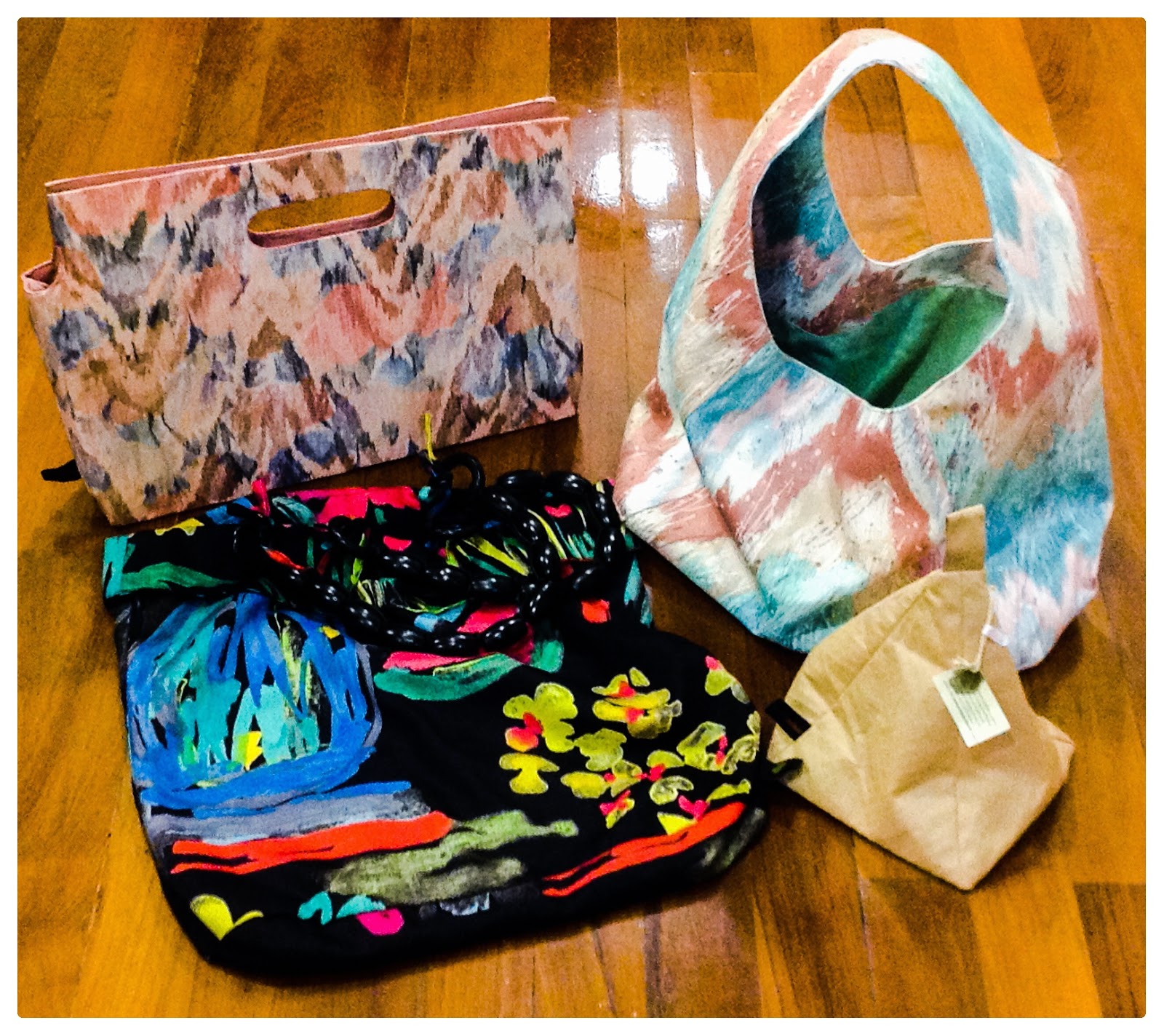
My Lotus Culture Purchase (Clockwise): Clutch Bag, Boho Bag, Door Stopper, Tote Bag
Lotus Culture's Brand Tag

Over the Labour Day holiday, I went to the 3rd anniversary sale of Lotus Culture, a social enterprise working to rebuild the lives of sex trafficking victims in Cambodia. Lotus Culture supports AFESIP Cambodia, an NGO that rescues and rehabilitates sex slaves, through three key areas - education, mental healthcare and social enterprise. The social enterprise component saw Lotus Culture fund a business called Kumnit Thmey that hires former victims to work as seamstresses. 

Lotus Culture is co-founded by Sylvia Lee who is also the founder of EmancipAsia, a not-for-profit organisation whose mission is to raise awareness and advocate action against human trafficking. She proudly told me that they managed to keep the overhead costs low thanks to the help of skilled volunteers as well as self-funded trips to Cambodia. This is to ensure that most of the donations go directly to the beneficiaries. The low overheads are also reflected in the price-point of their well-made products. The three bags I bought (at less than $100) remind me of the bags you can get at fast-fashion retain chains minus the abusive, sweatshop manufacturing conditions. 

                                                                       Singapore Committee for UN Women Gala Screening of 3.50 The Movie 
                                                                                               (Please excuse the terrible resolution!)

Shopping at Lotus Culture reminded me of a local movie I recently caught called 3.50 The Movie which spotlights the sex trafficking trade in Cambodia, in particular the lucrative virgin market. Due to abject poverty, young girls were sold by their parents or tricked by promises of well-paid work in the city, only to be forced into sex slavery. I can still recall a very disturbing scene whereby a victim's hymen was sewed by a dodgy doctor to make her a "virgin" again in order to raise her street value. I cannot even begin to imagine how it would feel like to be put through such pain and suffering. 

Social enterprises such as Lotus Culture work with aid organisations to provide employment for these survivors so they can rebuild their lives and create a better future for themselves. Products sold by Lotus Culture include an assortment of bags such as handbags, totes and clutches as well as home decor items. The enterprise also produce custom-made gifts for corporate clients. You can purchase their products from The Shop at The Arts House, online via Shop For Social or you can add them onto Facebook to receive notices on upcoming sales events. 

Wednesday, 30 April 2014

May Day Perspective: Fair Trade & Labour Rights

Photo Courtesy of Loesje International

Today is Labour Day so I think it would be fitting to talk about the connection between fair trade and labour rights. 

First thing first, what is fair trade?

According to the World Fair Trade Organisation, fair trade is a trading partnership, based on dialogue, transparency and respect, that seeks greater equity in international trade. In simple terms, fair trade ensures that people involved in the production process in the developing nations are fairly paid for their work and provided with decent working environment. 

Fair trade seeks to protect labour rights in the following ways: 

Fair trade means fair pay
Fair trade cuts out the middlemen that exploit producers and works directly with them. This means that producers have a say on what constitute a fair price for their commodities or goods. 

Fair trade means better working conditions
Organisations are required to comply with local labour legislations on working hours and safety standards as well as the International Labour Organization (ILO) conventions on health and safety. 

Fair trade means no child labour
Organisations have to adhere to the UN Convention on the Rights of the Child, and local laws on the employment of children. Organisations must ensure that no child labour is used in the production process to be certified as fair trade. 

Fair trade means jobs for marginalised workers
Fair trade usually creates jobs and economic opportunities by partnering with cooperatives or associations that are committed to the social, health and economic well-being of members. In addition, fair trade organisations also work with other marginalised communities such as the disabled, human trafficking victims and refugees that may otherwise have difficulty securing employment. 

Fair trade means no discrimination 
Fair trade works to ensure equal pay for equal work for both men and women. Organisations cannot discriminate based on gender, race, caste, nationality, religion, disability, age and various other non-performance related factors.

Fair trade means women are empowered
Fair trade by definition seeks to eliminate discriminatory labour practices which generally affects women. On top of fair wages and labour protection, fair trade cooperatives also afford women opportunities for education, leadership roles and entrepreneurships.

Thursday, 24 April 2014

Excuse me, miss....your clothes are #InsideOut?


"Excuse me, miss...your clothes are inside out?" were the first words spoken to me as I walked towards the office. 

"Yes, I know," I confidently responded. "You mean this is deliberate?" said the confused lady. I replied with an affirmative YES and proceeded to explain to her the significance of this campaign. 

Today is Fashion Revolution Day. It was created to commemorate the anniversary of the Rana Plaza collapse in Bangladesh that killed over 1130 people, mostly garment factory workers and injured another 2500 other workers due to illegal extensions made to the building. 

It is a call for action to the fashion and retail industry to treat those who made our clothes better. From the machinist sewing our clothes to the farmers growing and harvesting the cottons. Each and everyone in the retail supply chain should be accorded with the respect and dignity they deserve. 

Given the global nature of the fashion and retail industry's supply chain, it may be difficult to effect change as retailers can easily shift their apparel productions to other low-cost countries with little labour rights and protection. It is, unfortunately, a race to the bottom as retailers chase their own bottom line. But we - as consumers - can take a stand through our purchasing power. By making an effort to support fairly traded goods, we send a signal to retailers that we will not stand for their exploitation of these poor workers. 

So, let's take a stand and start a fashion revolution. Ask them. Who Made Your Clothes?