Showing posts with label Women Empowerment. Show all posts

Saturday, 7 June 2014

Beautiful Clothes, Ugly Reality: Cambodian Garment Workers Turned Models to Fight for Rights

Garment factory workers model clothes for the 'Beautiful Clothes, Ugly Reality' fashion show in Phnom Penh.
Photo courtesy of Nicolas Axelrod/Roum
Two weeks ago, the Workers Information Centre (WIC), an organization striving to improve working conditions for women garment workers, held a fashion show in Phnom Penh, Cambodia. However, the women donning these clothes were not your usual 6 foot-tall, waif-like models. Rather, the fashion show engaged the very same people who toiled under deplorable conditions and paltry wages to model the clothes they make for well-known, global brands to spotlight the social injustice facing them.

The aptly themed 'Beautiful Clothes, Ugly Reality' fashion show serves as a platform to highlight the huge income disparities between garment workers and apparel brand owners as well as to advocate for a living wage and better working conditions for these workers. Garment workers in Cambodia not only face poor working conditions and low pay but also live in fear due to violent government clampdowns that have killed five garment workersRuom Collective, a Cambodian-based social journalism platform, provides an excellent coverage of the fashion show including the issues facing these garment workers.


The Workers Information Centre is a partner organisation of the International Women's Development Agency (IWDA), a Melbourne-based NGO that I support. Above is a video made by IWDA to educate consumers on the unfair and often exploitative treatments of Cambodian garment workers, of which 90 percent comprises of women. It serves to highlight the good work carried out by WIC to empower women garment workers in Cambodia by helping them fight for a fairer wage and working conditions.

According to reports carried by just-style and Shanghai Daily, global brands including H&M, GAP and the Inditex Group (Mango, Zara etc.) have indicated that they support higher minimum wages for Cambodian garment workers. As consumers with voting rights i.e. purchasing power, let's hold these highly-profitable labels accountable for the promises they have made.

Saturday, 31 May 2014

Blueprint: Supporting Emerging, Ethical Designers


Forty Red Bangles
Several weeks ago, I visited BLUEPRINT an annual fashion trade show that showcases emerging and established Asian designers as well as international brands looking to enter the Asian retail markets. Obviously, my primary purpose was really to suss out new ethical labels that are making a difference to their communities and the world at large. I'm happy to report that I've found several stylish, sustainable brands gracing the 5th Edition of the event.

One of the brands I was looking forward to check out was Forty Red Bangles, a socially conscious fashion brand from India that sells a wide-range of products from organic apparels to upcycled accessories from the House of Wandering Silk as well as handmade toys. They also have an adorable kids line called Four Red Bangles that sells kurta pyjamas made from certified organic cotton and printed with low impact GOTS certified dyes. Since I have so many friends with young ones, I can foresee Four Red Bangles being a major source of gifts for their kids.

The story behind the brand fascinates me. Ramona Saboo, the founder of Forty Red Bangles, hails from Australia and migrated to India after marriage and has since moved to Singapore. The name Forty Red Bangles was inspired by the forty red and white bangles traditionally worn by Indian brides as a symbol of luck and safety. For Ramona, the bangles represent the connection between her past and her future. The brand was established as a way for her to showcase the beauty of India's craftsmanship and design with sustainability in mind.

Community development is a major part of Forty Red Bangles philosophy.They work with small artisan communities in India as well as non-governmental organisations. They are heavily involved in projects that focus on the empowerment of marginalised women such as the Sambhali Trust in Jodhpur and Gramshree in Gujarat. These organisations provide women, especially those from the lower-caste, with the means to achieve financial independence as well as preserve traditional skills and craftsmanship.

Clockwise, Zariin Jewelry, Betel Life and Kolombiana
Apart from Forty Red Bangles, several other ethical brands that also caught my attention at the trade show includes Zariin Jewelry, Betel Life and Kolombiana. Zariin Jewelry sells semi-precious jewellery fairly made by Indian artisans with a portion of the proceed for every piece of jewellery sold going to the SOS Children's Villages IndiaBetel Life from Taiwan, on the other hand, sells eco-friendly slippers made of betel leaves which creates jobs for Taiwanese farmers as well as Taiwanese aboriginal weavers. Meanwhile, Kolombiana sells tribal bags handmade by artisans from indigenous communities across South America to provide them with means of livelihood and allowing them to preserve their hand weaving traditions. Kolombiana also has a brick-and-mortar shop in Haji Lane so drop by their store when you're in the Kampong Glam district.

Saturday, 10 May 2014

Help Anna: Style It Forward


Have any gently-used designer apparel and accessories to give away? If so, head to the Hilton Hotel between 29 May and 1 June to donate them as part of Club 21 Cares initiative. The donations will be used to fund the Singapore Committee for UN Women's Help Anna campaign through its charity sale. The campaign serves as part of its wider initiative on ending violence against women across the region.

Thursday, 1 May 2014

Lotus Culture: From Sexual Slavery to Seamstress

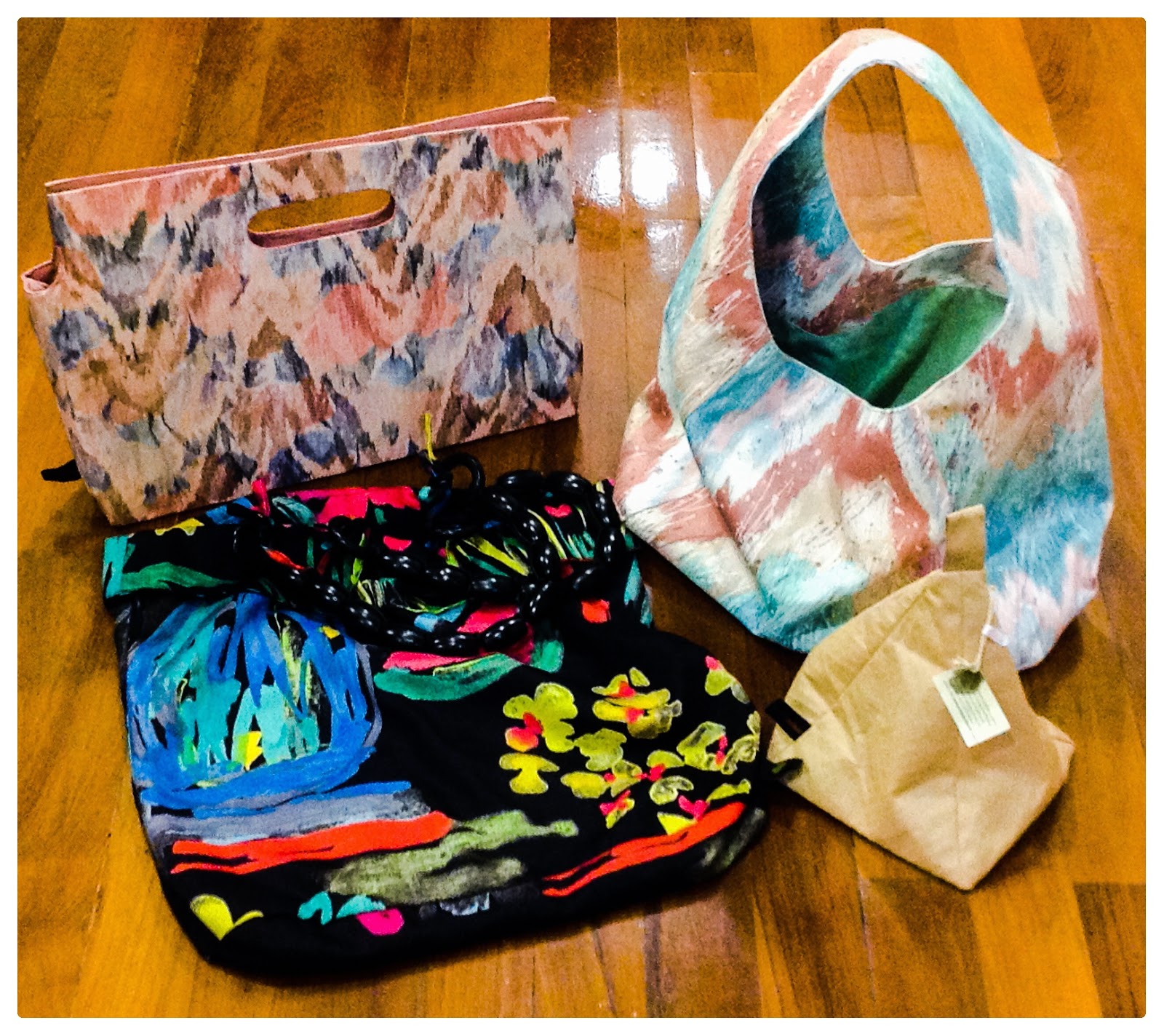
My Lotus Culture Purchase (Clockwise): Clutch Bag, Boho Bag, Door Stopper, Tote Bag
Lotus Culture's Brand Tag

Over the Labour Day holiday, I went to the 3rd anniversary sale of Lotus Culture, a social enterprise working to rebuild the lives of sex trafficking victims in Cambodia. Lotus Culture supports AFESIP Cambodia, an NGO that rescues and rehabilitates sex slaves, through three key areas - education, mental healthcare and social enterprise. The social enterprise component saw Lotus Culture fund a business called Kumnit Thmey that hires former victims to work as seamstresses. 

Lotus Culture is co-founded by Sylvia Lee who is also the founder of EmancipAsia, a not-for-profit organisation whose mission is to raise awareness and advocate action against human trafficking. She proudly told me that they managed to keep the overhead costs low thanks to the help of skilled volunteers as well as self-funded trips to Cambodia. This is to ensure that most of the donations go directly to the beneficiaries. The low overheads are also reflected in the price-point of their well-made products. The three bags I bought (at less than $100) remind me of the bags you can get at fast-fashion retain chains minus the abusive, sweatshop manufacturing conditions. 

                                                                       Singapore Committee for UN Women Gala Screening of 3.50 The Movie 
                                                                                               (Please excuse the terrible resolution!)

Shopping at Lotus Culture reminded me of a local movie I recently caught called 3.50 The Movie which spotlights the sex trafficking trade in Cambodia, in particular the lucrative virgin market. Due to abject poverty, young girls were sold by their parents or tricked by promises of well-paid work in the city, only to be forced into sex slavery. I can still recall a very disturbing scene whereby a victim's hymen was sewed by a dodgy doctor to make her a "virgin" again in order to raise her street value. I cannot even begin to imagine how it would feel like to be put through such pain and suffering. 

Social enterprises such as Lotus Culture work with aid organisations to provide employment for these survivors so they can rebuild their lives and create a better future for themselves. Products sold by Lotus Culture include an assortment of bags such as handbags, totes and clutches as well as home decor items. The enterprise also produce custom-made gifts for corporate clients. You can purchase their products from The Shop at The Arts House, online via Shop For Social or you can add them onto Facebook to receive notices on upcoming sales events. 

Wednesday, 30 April 2014

May Day Perspective: Fair Trade & Labour Rights

Photo Courtesy of Loesje International

Today is Labour Day so I think it would be fitting to talk about the connection between fair trade and labour rights. 

First thing first, what is fair trade?

According to the World Fair Trade Organisation, fair trade is a trading partnership, based on dialogue, transparency and respect, that seeks greater equity in international trade. In simple terms, fair trade ensures that people involved in the production process in the developing nations are fairly paid for their work and provided with decent working environment. 

Fair trade seeks to protect labour rights in the following ways: 

Fair trade means fair pay
Fair trade cuts out the middlemen that exploit producers and works directly with them. This means that producers have a say on what constitute a fair price for their commodities or goods. 

Fair trade means better working conditions
Organisations are required to comply with local labour legislations on working hours and safety standards as well as the International Labour Organization (ILO) conventions on health and safety. 

Fair trade means no child labour
Organisations have to adhere to the UN Convention on the Rights of the Child, and local laws on the employment of children. Organisations must ensure that no child labour is used in the production process to be certified as fair trade. 

Fair trade means jobs for marginalised workers
Fair trade usually creates jobs and economic opportunities by partnering with cooperatives or associations that are committed to the social, health and economic well-being of members. In addition, fair trade organisations also work with other marginalised communities such as the disabled, human trafficking victims and refugees that may otherwise have difficulty securing employment. 

Fair trade means no discrimination 
Fair trade works to ensure equal pay for equal work for both men and women. Organisations cannot discriminate based on gender, race, caste, nationality, religion, disability, age and various other non-performance related factors.

Fair trade means women are empowered
Fair trade by definition seeks to eliminate discriminatory labour practices which generally affects women. On top of fair wages and labour protection, fair trade cooperatives also afford women opportunities for education, leadership roles and entrepreneurships.

Saturday, 26 April 2014

Design Up Asia - Empowering Single Mums to Become Jewellery Artisans


Photo courtesy of Design Up Asia
As part of the Fashion Revolution campaign, I attended an Upcycled Quality Jewellery Making Workshop conducted by Design Up Asia, a Singapore-based social enterprise with the mission to empower low-income, single mothers who are unable to afford childcare to earn a living through crafting jewellery from home.

The accessories are eco-friendly and sourced from recycled and vintage materials. Their main jewellery line is designed by highly-seasoned designers and looks like any trendy jewellery retailing in stores along the Orchard Road shopping belt. Prices are also affordable ranging from S$10 to S$50.


I spoke to Kim, one of the co-founders of Design Up Asia, who told me that the social enterprise was founded when they won the Arthur Guinness Fund Hackathon, a social innovation competition, organised to meet the needs of marginalised women in Singapore.


L. our trainer helping me secure the hooks on the bracelets

Muli-coloured recycled beads used in the jewellery-making process
The participants for this workshop were trained by L., a single mum under the Design Up Asia program. She painstakingly guided us amateurs to create stunning handmade pieces using recycled materials. After much frustration, fumbling around and reassembling the beads countless times, I finally made a classic 'pearl' bracelet and a clam-shell necklace inspired by a safari adventure and seaside escapade (?!!).
My safari adventure meets seaside escapade necklace
To view the main jewellery line, you can visit Design Up Asia online store or shop via Zalora SG. They also run jewellery making workshops for volunteers, corporations' team building sessions as well as personal events such as birthday parties. Design Up Asia can also create a customised line of jewellery upon request by clients. Do head to their website to check out the good work they are doing to support and empower single mums and also to pamper yourself (or your other half) with their trendy, handmade pieces.