Showing posts with label Human Trafficking. Show all posts

Saturday, 10 May 2014

Help Anna: Style It Forward


Have any gently-used designer apparel and accessories to give away? If so, head to the Hilton Hotel between 29 May and 1 June to donate them as part of Club 21 Cares initiative. The donations will be used to fund the Singapore Committee for UN Women's Help Anna campaign through its charity sale. The campaign serves as part of its wider initiative on ending violence against women across the region.

Thursday, 1 May 2014

Lotus Culture: From Sexual Slavery to Seamstress

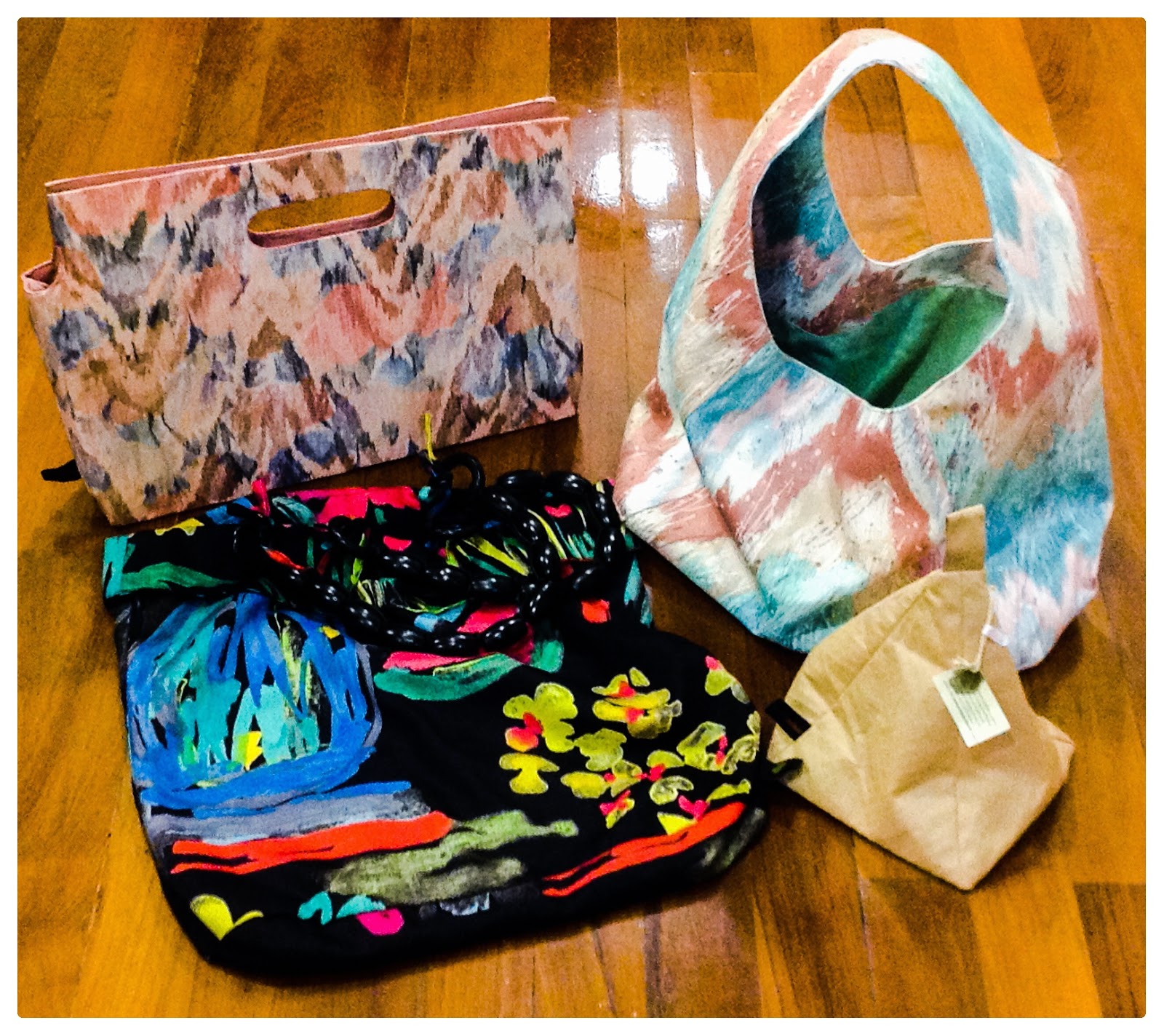
My Lotus Culture Purchase (Clockwise): Clutch Bag, Boho Bag, Door Stopper, Tote Bag
Lotus Culture's Brand Tag

Over the Labour Day holiday, I went to the 3rd anniversary sale of Lotus Culture, a social enterprise working to rebuild the lives of sex trafficking victims in Cambodia. Lotus Culture supports AFESIP Cambodia, an NGO that rescues and rehabilitates sex slaves, through three key areas - education, mental healthcare and social enterprise. The social enterprise component saw Lotus Culture fund a business called Kumnit Thmey that hires former victims to work as seamstresses. 

Lotus Culture is co-founded by Sylvia Lee who is also the founder of EmancipAsia, a not-for-profit organisation whose mission is to raise awareness and advocate action against human trafficking. She proudly told me that they managed to keep the overhead costs low thanks to the help of skilled volunteers as well as self-funded trips to Cambodia. This is to ensure that most of the donations go directly to the beneficiaries. The low overheads are also reflected in the price-point of their well-made products. The three bags I bought (at less than $100) remind me of the bags you can get at fast-fashion retain chains minus the abusive, sweatshop manufacturing conditions. 

                                                                       Singapore Committee for UN Women Gala Screening of 3.50 The Movie 
                                                                                               (Please excuse the terrible resolution!)

Shopping at Lotus Culture reminded me of a local movie I recently caught called 3.50 The Movie which spotlights the sex trafficking trade in Cambodia, in particular the lucrative virgin market. Due to abject poverty, young girls were sold by their parents or tricked by promises of well-paid work in the city, only to be forced into sex slavery. I can still recall a very disturbing scene whereby a victim's hymen was sewed by a dodgy doctor to make her a "virgin" again in order to raise her street value. I cannot even begin to imagine how it would feel like to be put through such pain and suffering. 

Social enterprises such as Lotus Culture work with aid organisations to provide employment for these survivors so they can rebuild their lives and create a better future for themselves. Products sold by Lotus Culture include an assortment of bags such as handbags, totes and clutches as well as home decor items. The enterprise also produce custom-made gifts for corporate clients. You can purchase their products from The Shop at The Arts House, online via Shop For Social or you can add them onto Facebook to receive notices on upcoming sales events. 

Wednesday, 30 April 2014

May Day Perspective: Fair Trade & Labour Rights

Photo Courtesy of Loesje International

Today is Labour Day so I think it would be fitting to talk about the connection between fair trade and labour rights. 

First thing first, what is fair trade?

According to the World Fair Trade Organisation, fair trade is a trading partnership, based on dialogue, transparency and respect, that seeks greater equity in international trade. In simple terms, fair trade ensures that people involved in the production process in the developing nations are fairly paid for their work and provided with decent working environment. 

Fair trade seeks to protect labour rights in the following ways: 

Fair trade means fair pay
Fair trade cuts out the middlemen that exploit producers and works directly with them. This means that producers have a say on what constitute a fair price for their commodities or goods. 

Fair trade means better working conditions
Organisations are required to comply with local labour legislations on working hours and safety standards as well as the International Labour Organization (ILO) conventions on health and safety. 

Fair trade means no child labour
Organisations have to adhere to the UN Convention on the Rights of the Child, and local laws on the employment of children. Organisations must ensure that no child labour is used in the production process to be certified as fair trade. 

Fair trade means jobs for marginalised workers
Fair trade usually creates jobs and economic opportunities by partnering with cooperatives or associations that are committed to the social, health and economic well-being of members. In addition, fair trade organisations also work with other marginalised communities such as the disabled, human trafficking victims and refugees that may otherwise have difficulty securing employment. 

Fair trade means no discrimination 
Fair trade works to ensure equal pay for equal work for both men and women. Organisations cannot discriminate based on gender, race, caste, nationality, religion, disability, age and various other non-performance related factors.

Fair trade means women are empowered
Fair trade by definition seeks to eliminate discriminatory labour practices which generally affects women. On top of fair wages and labour protection, fair trade cooperatives also afford women opportunities for education, leadership roles and entrepreneurships.

Tuesday, 29 April 2014

One Day Without Shoes, Can You?


Photo courtesy of TOMS
April 29 this year is designated as One Day Without Shoes  by none other than TOMS, the shoes company that popularised the One-for-One movement whereby for every pair of shoes bought, another is given to a child in need. In line with the brand's mission, the campaign aims to raise awareness on children's health and education in impoverished nations by highlighting the roles shoes play in health prevention and educational access.

Unlike previous years, there are no public events in Singapore to support this campaign. Rockstar Singapore put up a pretty cool campaign at their store last year and what appears to be a grassroot campaign was organised in 2012.


Admittedly, I didn't spend the entire a day without shoes, maybe just one-third of my day (and most of it at home!). But what brought to my attention with this campaign was how most of us take so many things for granted. Things such as fresh air, clean water, three square meals a day and even yes...even the shoes on our feet.


Bryan Manuel from Guatemala had his eyesight restored with the support of TOMS eyewear purchase.
Photo courtesy of TOMS.
TOMS have also branched out to selling eyewear and coffee using the same, successful One for One business model. For their eyewear business, TOMS have pledged to use part of the profits to restore eyesights to those in need whereas TOMS coffee provides one week of clean water to a person in need. They also organise annual charity trips for volunteers and fans of TOMS to distribute the donated shoes through the help of their Giving Partners.

TOMS are not without their critics. Development organisations and fair trade activists have argued that the 'One for One' model is nothing more than marketing wizardry that makes consumers feel great but creates a culture of aid dependency and destroy economies of donor countries. In addition, their use of third-party manufacturers have also raised concerns about the ethics and transparency of their supply chain.


That said, it is heartening to know that TOMS are paying heed to these critics and have committed to not only address the risks in TOMS' supply chain but also create jobs in donor nations as exemplified by their Haiti Artist Collective. They are also offering shoes using raw and organic materials to limit their environmental impact. Also, in the context of Singapore and Asia in general, purchasing a pair of TOMS is probably heaps better than buying mass-manufactured shoes in the shopping mall where accountability and transparency is few and far between.

My pick: TOMS shoes collaboration with designer, Jonathan Adler

For those keen on getting a pair of TOMS' trendy slip-on shoes, you can head to Rockstar Singapore and Pedder Red (Ngee Ann City) or shop online via vPost